




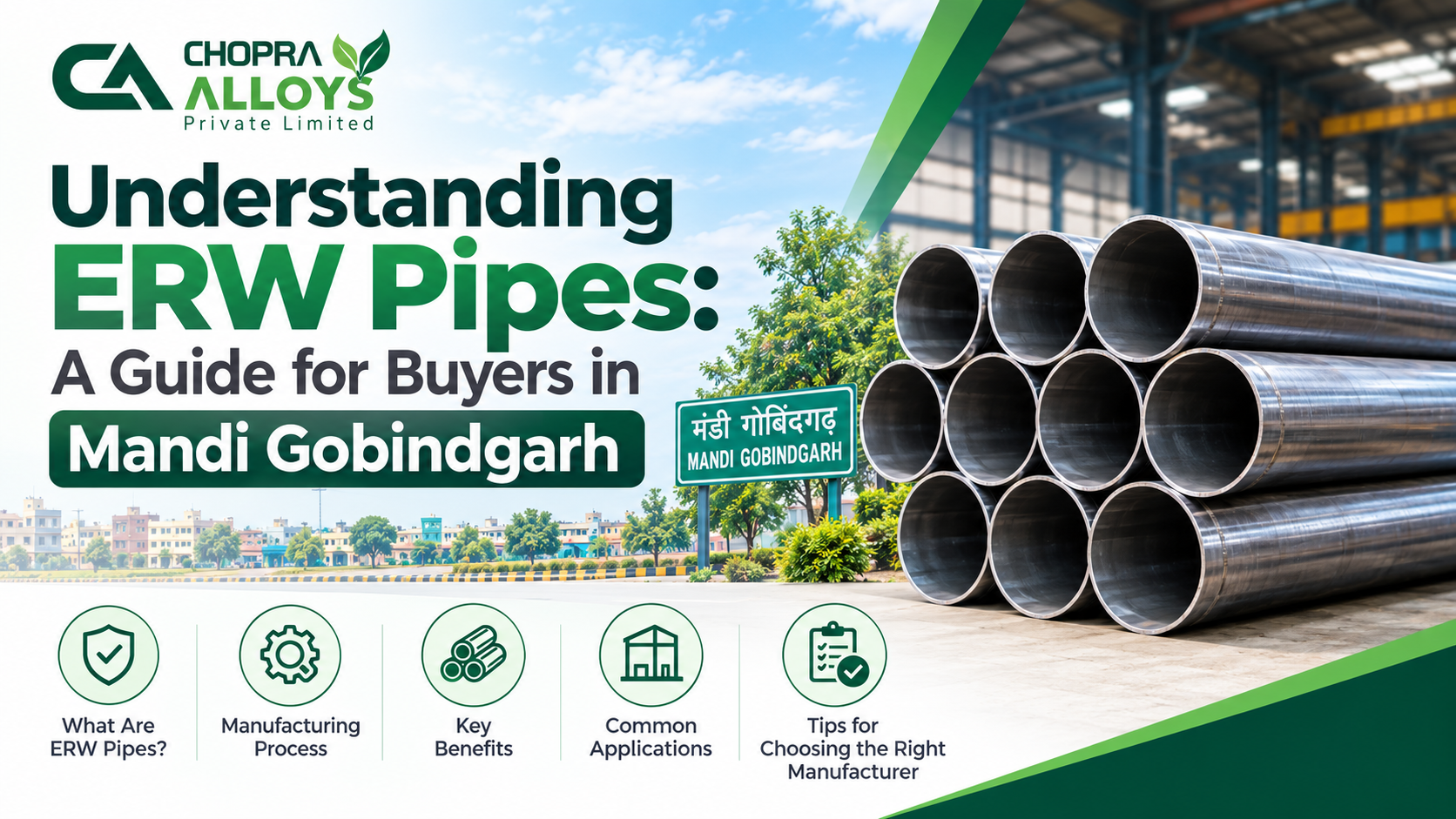
Steel pipes are an essential part of modern construction, infrastructure, fabrication, and industrial manufacturing. Among the different types available, Electric Resistance Welded (ERW) pipes are widely used because of their versatility, consistent dimensions, and suitability for a variety of applications.
For businesses in Mandi Gobindgarh and nearby industrial areas, understanding ERW pipes can help simplify purchasing decisions. Whether you are a construction contractor, fabricator, industrial buyer, or distributor, knowing the manufacturing process, benefits, and selection criteria can help you choose the right product for your requirements.
In this guide, we will explain what ERW pipes are, where they are used, and what buyers should consider when selecting an ERW pipe manufacturer in Mandi Gobindgarh.
What Are ERW Pipes?
ERW stands for Electric Resistance Welded. These pipes are manufactured by forming flat steel strips or coils into a cylindrical shape and joining the edges through an electric resistance welding process.
During manufacturing, the steel is shaped into a tubular section, and its edges are heated and joined to create a longitudinal weld seam. The pipe is then processed and inspected according to the required specifications.
ERW pipes are available in different sizes, wall thicknesses, and grades, depending on the manufacturing capabilities and intended application. Their versatility makes them suitable for many construction, engineering, fabrication, and industrial requirements.
How Are ERW Pipes Manufactured?
Understanding the manufacturing process helps buyers appreciate the importance of raw material quality and production control.
The typical ERW pipe manufacturing process includes the following stages:
1. Selection of Raw Material
Steel coils are selected according to the required grade, thickness, and product specifications. The quality of the raw material influences the characteristics of the finished pipe.
2. Slitting and Preparation
Where required, steel coils are slit into strips of the appropriate width for the desired pipe dimensions.
3. Forming
The steel strip passes through forming rolls that gradually shape it into a cylindrical tube.
4. Electric Resistance Welding
The edges of the formed strip are joined using electric resistance welding. Proper control of the welding process is important for producing a consistent weld seam.
5. Sizing and Finishing
The pipe passes through sizing equipment to achieve the required dimensions. Additional finishing operations may be performed depending on the product specifications.
6. Quality Inspection
The finished pipes are checked against applicable requirements, which may include dimensions, wall thickness, appearance, and weld integrity. The exact inspection and testing procedures depend on the product standard and intended use.
A controlled manufacturing process helps ensure that the finished pipes meet the specifications agreed upon with the buyer.
Key Benefits of ERW Pipes
ERW pipes offer several advantages that make them suitable for a wide range of applications.
1. Consistent Dimensions
ERW pipes can be manufactured to specified outside diameters and wall thicknesses. Dimensional consistency is particularly important in fabrication, structural work, and applications where pipes must fit with other components.
2. Versatile Applications
ERW pipes are used across different industries, including construction, engineering, infrastructure, fabrication, and general manufacturing. Their suitability depends on the pipe grade, dimensions, and applicable technical requirements.
3. Efficient Manufacturing
The ERW process supports continuous production, making it suitable for manufacturing pipes in commercial quantities. This can help manufacturers fulfil recurring orders when production capacity and raw material availability permit.
4. Different Size Options
Depending on the manufacturer’s production range, buyers can source ERW pipes in different diameters and thicknesses to meet their project requirements.
5. Practical for Industrial Requirements
ERW pipes are widely used in applications where specified dimensions, suitable material properties, and consistent supply are important considerations.
It is important to select the appropriate grade and specification rather than assuming that every ERW pipe is suitable for every application.
Common Applications of ERW Pipes
ERW pipes serve a broad range of industrial and commercial purposes. Some common applications include:
- Construction: Used in suitable structural and supporting applications according to the required design specifications.
- Infrastructure: Used in selected infrastructure projects where the relevant pipe specifications are appropriate.
- Fabrication: Used by fabricators for frames, supports, assemblies, and other manufactured components.
- Engineering and Manufacturing: Used in machinery-related structures, equipment fabrication, and general engineering applications.
- Industrial Projects: Used in applications requiring steel tubular sections with specified dimensions and material properties.
- Commercial Structures: Used in suitable frameworks, sheds, and other structures where the design permits their use.
For applications involving pressure, specialised fluids, demanding service conditions, or safety-critical structures, buyers should verify the relevant standards and suitability requirements before selecting a pipe.
How to Choose an ERW Pipe Manufacturer in Mandi Gobindgarh
Selecting the right supplier is an important step for buyers who need dependable steel pipes for ongoing operations or individual projects.
When evaluating an ERW Pipe Manufacturer in Mandi Gobindgarh, consider the following factors.
1. Check Product Quality
Ask about the manufacturer’s quality control procedures, material specifications, and inspection practices. Where required, request relevant test reports and documentation to verify that the pipes meet the agreed requirements.
2. Confirm Available Sizes and Thicknesses
Different applications require different pipe dimensions. Before placing an order, confirm the available outside diameters, wall thicknesses, lengths, and material grades.
3. Understand Manufacturing Capabilities
A manufacturer’s production capacity and product range can affect its ability to fulfil bulk and repeat orders. Discuss your expected quantities and delivery schedule before finalising the supplier.
4. Compare Prices and Specifications
When comparing quotations, make sure the products being compared have the same grade, dimensions, thickness, and applicable standards. A lower price may not represent better value if the specifications differ.
5. Evaluate Delivery Commitments
Timely supply helps construction companies, fabricators, and manufacturers maintain their schedules. Confirm production lead times, dispatch arrangements, packaging, and transportation responsibilities.
6. Look for Clear Communication
A dependable supplier should clearly explain product specifications, pricing terms, order quantities, and delivery expectations. Good communication can help reduce misunderstandings and support long-term business relationships.
By considering these factors together, buyers can make a more informed decision and identify a supplier that matches their technical and commercial requirements.
Why Mandi Gobindgarh Matters for Steel Buyers
Mandi Gobindgarh is widely recognised as an important steel and metal trading and processing centre in Punjab. Its industrial ecosystem makes the region relevant to businesses involved in steel procurement, manufacturing, fabrication, and related activities.
For local buyers, sourcing steel products from suppliers serving the region can make it easier to compare product options, discuss bulk requirements, and coordinate deliveries.
However, buyers should evaluate each manufacturer or supplier individually. Product quality, manufacturing capabilities, documentation, and order fulfilment should remain the primary considerations when choosing an ERW pipe supplier.
Businesses can also explore suppliers in nearby industrial centres, including Ludhiana, to compare available product ranges and commercial terms.
Why Choose Chopra Alloys for ERW Pipe Requirements?
Chopra Alloys is associated with steel products, including ERW pipes, serving the requirements of industrial and commercial buyers.
For businesses looking for an ERW Pipe Manufacturer in Mandi Gobindgarh or a supplier serving nearby industrial markets, Chopra Alloys can be considered as part of the supplier evaluation process.
When discussing your requirements, it is useful to specify the intended application, pipe dimensions, wall thickness, material grade, required quantity, and applicable standards. These details help establish whether the available products meet your needs and support a more accurate quotation.
Buyers with regular or bulk requirements should also discuss expected order volumes and delivery schedules before confirming a purchase.
Selecting the right steel pipe is not simply about choosing a product at the lowest price. It involves matching the product specifications to the application and working with a supplier that can meet the agreed requirements.
Conclusion
ERW pipes are an important steel product used in construction, fabrication, engineering, infrastructure, and various industrial applications. Their versatility and availability in different dimensions make them a practical choice for many projects when selected according to the correct specifications.
For buyers in Mandi Gobindgarh, understanding the manufacturing process, product benefits, quality requirements, and supplier evaluation criteria can make the purchasing process more effective.
Before selecting an ERW pipe manufacturer, compare product specifications, manufacturing capabilities, quality documentation, pricing, and delivery commitments. Taking these steps can help you make a well-informed purchasing decision and establish a dependable supply relationship.
Looking for ERW pipes for your business? Contact Chopra Alloys to discuss your steel pipe requirements, specifications, and bulk enquiries.
