




In today’s rapidly developing industrial and infrastructure sectors, the demand for strong, reliable, and high-quality steel pipes continues to grow. HR Coils, manufactured from Hot Rolled (HR) coils, are widely used across construction, engineering, infrastructure, transportation, agriculture, and various industrial applications. Choosing a reliable HR Coil Manufacturer is essential to ensure consistent quality, dimensional accuracy, durability, and dependable performance.
What Are HR Coils?
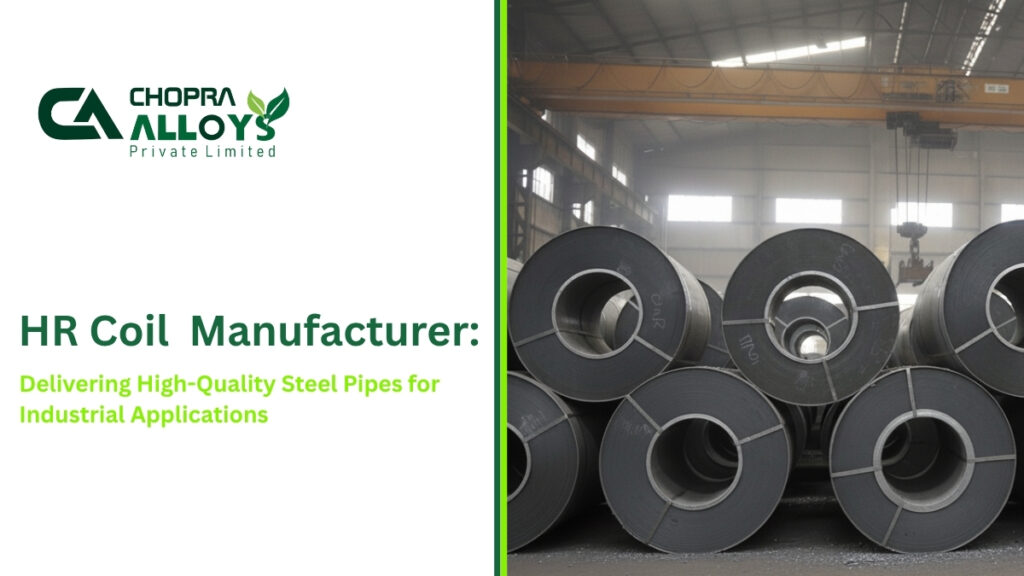
HR Coils are steel pipes manufactured using Hot Rolled (HR) coils as the primary raw material. HR coils are processed through modern pipe manufacturing systems, where the steel is formed into the required shape and welded to produce strong and durable pipes.
The manufacturing process involves several stages, including coil preparation, slitting, forming, welding, sizing, cutting, and quality inspection. Advanced manufacturing technology helps maintain uniform dimensions and consistent mechanical properties throughout the production process.
Why Choose HR Coils?
HR Coils offer several advantages that make them suitable for demanding applications. Their strength, durability, and versatility allow them to perform effectively in different industrial environments.
Key advantages include:
- High structural strength
- Excellent durability
- Consistent dimensions
- Reliable welding quality
- Good load-bearing capacity
- Versatile application range
- Cost-effective solution for industrial projects
- Suitable for fabrication and engineering applications
The quality of the raw material plays an important role in the final performance of the pipe. For this reason, manufacturers must carefully select and inspect HR coils before beginning production.
Manufacturing Process of HR Coils
A professional HR Coil Manufacturer follows a systematic production process to achieve consistent quality.
1. HR Coil Selection
The process begins with the selection of suitable hot rolled steel coils. The coils are checked for thickness, width, surface condition, chemical composition, and other required parameters.
2. Coil Slitting
The HR coil may be slit into the required widths depending on the pipe dimensions and specifications. Accurate slitting ensures proper material utilization and supports consistent pipe formation.
3. Pipe Forming
The prepared steel strip passes through a series of forming rolls. Gradually, the flat strip is formed into a cylindrical shape according to the required pipe diameter.
4. Welding
The edges of the formed strip are joined using an appropriate welding process. Proper control of welding parameters is essential to achieve a strong and consistent joint.
5. Sizing and Straightening
After welding, the pipe passes through sizing equipment to achieve the required outside diameter and dimensional accuracy. Straightening may also be carried out to maintain proper alignment.
6. Cutting
The continuous pipe is cut into specific lengths according to customer requirements and project specifications.
7. Quality Inspection
Finished pipes undergo quality checks to verify dimensions, surface condition, weld quality, and other required properties. This stage helps ensure that the final product meets applicable specifications and customer expectations.
Applications of HR Coils
HR Coils are used across a wide range of industries because of their strength and adaptability.
Construction and Infrastructure
HR Coils are commonly used in structural and infrastructure projects where durable steel products are required. They can be used in frameworks, supports, fabrication, and other construction-related applications.
Engineering and Fabrication
Engineering companies and fabricators use HR Coils for manufacturing structures, equipment components, frames, supports, and fabricated assemblies.
Agriculture
Steel pipes are used in agricultural infrastructure, including irrigation systems, water transportation, supports, and other applications where durable piping solutions are required.
Industrial Applications
Various manufacturing and industrial facilities require steel pipes for structural, mechanical, and general-purpose applications. HR Coils can provide a practical solution for many of these requirements.
Transportation and Infrastructure Projects
Steel pipes can also be utilized in infrastructure development, transportation-related structures, and projects requiring reliable steel components.
Importance of Choosing the Right HR Coil Manufacturer
Selecting the right manufacturer is an important decision for buyers, contractors, and industrial companies. A dependable manufacturer should have appropriate production facilities, experienced technical professionals, quality control systems, and the ability to maintain consistent product specifications.
When evaluating an HR Coil manufacturer, consider factors such as:
- Quality of HR coil raw materials
- Manufacturing technology
- Welding and forming capabilities
- Dimensional accuracy
- Quality inspection procedures
- Production capacity
- Product customization options
- Packaging and dispatch practices
- Ability to meet bulk requirements
- Customer support and technical assistance
A manufacturer with strong quality-control practices can help reduce product inconsistencies and provide greater reliability for large-scale projects.
Quality Control in HR Coil Manufacturing
Quality control is an important part of modern steel pipe manufacturing. Every stage, from raw material selection to finished-product inspection, can influence the final performance of the pipe.
Manufacturers may inspect parameters such as:
- Pipe diameter
- Wall thickness
- Length
- Surface condition
- Straightness
- Weld appearance
- Mechanical properties
- Chemical composition, where required
Consistent inspection helps manufacturers maintain product quality and meet the specifications required by customers and industries.
Why Businesses Prefer Reliable Steel Pipe Suppliers
For industrial buyers, consistent supply is just as important as product quality. Delays, inconsistent dimensions, or variations in material quality can affect production schedules and project timelines.
A reliable HR Coil Manufacturer can support businesses by providing:
Consistent Quality: Uniform products help maintain predictable performance.
Bulk Supply Capability: Suitable production capacity helps meet large-volume requirements.
Customized Specifications: Pipes can be manufactured according to required sizes, thicknesses, and lengths where technically feasible.
Reliable Delivery: Organized production and dispatch processes help support project schedules.
Technical Expertise: Experienced manufacturers can help customers select suitable products for their applications.
HR Coils and Modern Industrial Development
As infrastructure and industrial development continue to expand, the need for dependable steel products is increasing. HR Coils provide a practical combination of strength, versatility, and manufacturing flexibility for numerous applications.
From construction projects and engineering fabrication to agriculture and industrial infrastructure, these pipes contribute to the development of durable and efficient structures.
The future of HR Coil manufacturing will increasingly depend on advanced production technology, efficient material utilization, quality assurance, and customer-focused manufacturing practices.
Chopra Alloys – Your Trusted Steel Manufacturing Partner
At Chopra Alloys, quality, consistency, and manufacturing excellence are central to our approach. With a focus on reliable steel products and modern manufacturing practices, we aim to meet the requirements of customers across construction, engineering, infrastructure, and industrial sectors.
From raw material selection to manufacturing and quality inspection, every stage requires careful attention to detail. Our commitment is to provide steel solutions that deliver dependable performance and support the requirements of demanding applications.
Conclusion
Choosing a dependable HR Coil Manufacturer is essential for businesses looking for durable, consistent, and application-oriented steel piping solutions. High-quality HR Coils can serve a wide range of construction, engineering, agricultural, infrastructure, and industrial requirements.
With proper raw material selection, advanced manufacturing processes, accurate forming and welding, and stringent quality inspection, HR Coils can provide the strength and reliability required for modern projects.
For businesses looking for a reliable steel manufacturing partner, working with an experienced manufacturer can make a significant difference in product quality, supply consistency, and overall project performance.
